

Azelaic acid: one ingredient for redness, breakouts, and dark spots at once
Frequently asked questions
Azelaic acid is a natural acid that's derived from grains or made synthetically, and your skin also produces it in small amounts. In skincare you'll find it at 10%, at the pharmacy at 15 to 20%. It calms inflammation, holds back bacteria, and slows down pigment production. That's why it helps with redness, breakouts, and dark spots at the same time.
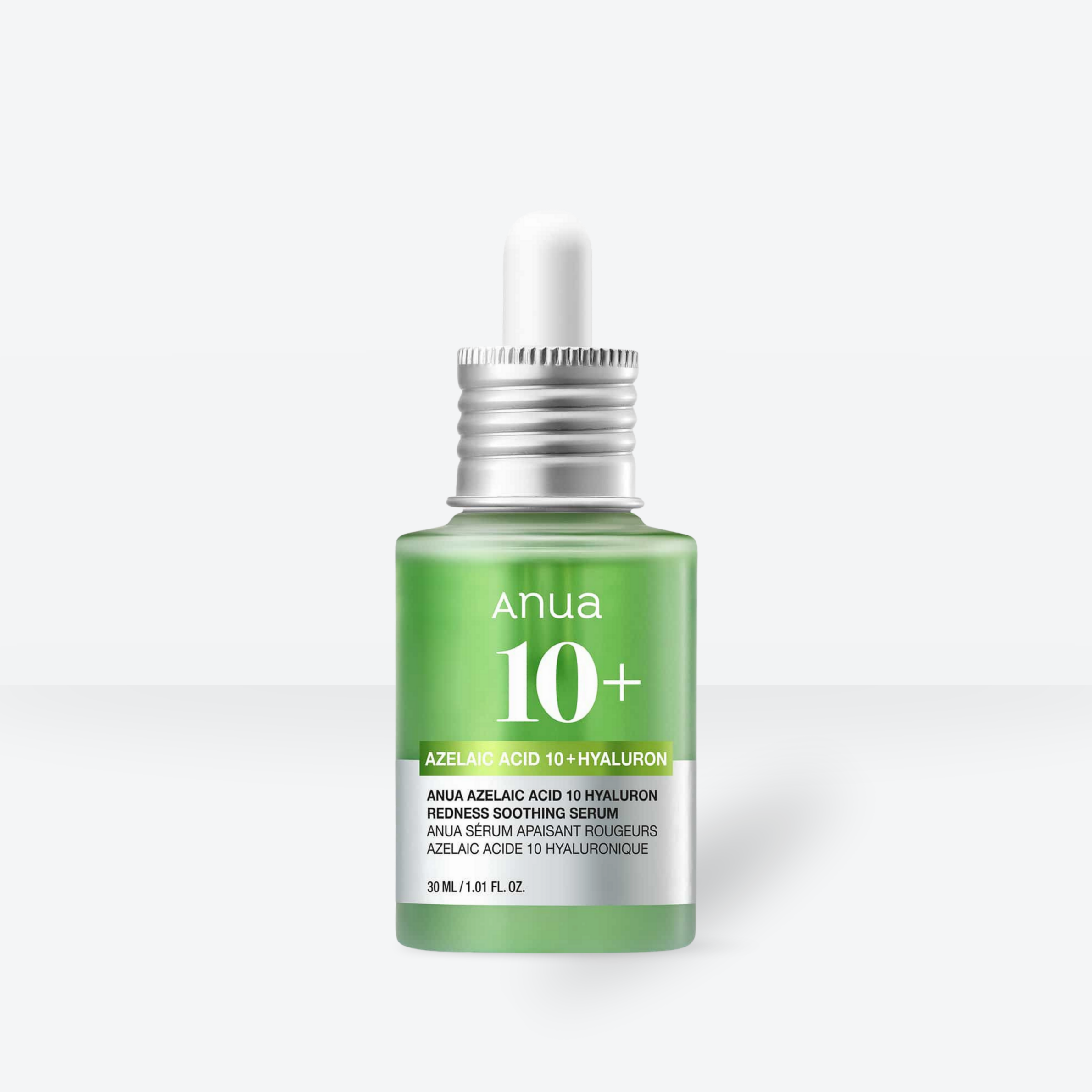
Yes, it's the same ingredient, just two versions of the name. The correct name is azelaic acid, and that's also what the packaging says. Searching for azelainic acid brings up the same products. At dglow you'll find it in the ANUA serum.
It reduces redness, calms breakouts and prevents new ones, fades the marks they leave, and evens out your skin tone. It also soothes your skin, so even reactive skin can handle it. Redness fades first, then breakouts, and dark spots last, because pigment fades the slowest. It doesn't peel or dry out your skin.
Yes, it's considered one of the most tested ingredients for rosacea, because it calms inflammation and redness without irritating your skin. In skincare you use it at 10%, and a doctor can prescribe a stronger one. Start slowly, two to three times a week, and leave out other acids. Alongside it, you need a gentle cleanser, a skin barrier cream, and SPF.
After cleansing and toner, apply one to two drops of serum to your face, then cream, and SPF during the day. For the first two weeks, use it once or twice a week in the evening, then gradually increase to twice a day. Slight tingling at first is normal and goes away. Stinging or peeling means it's time for a break of a few days.
Yes, once your skin gets used to it, even twice a day, morning and evening. 10% in skincare is a dose made for daily use. At first, though, introduce it gradually, as the product instructions say. In the morning, pair it with SPF.
For fresh post-breakout marks and for skin with redness, choose azelaic acid, because it also calms the inflammation that causes the mark. For a dull complexion and sun spots on calm skin, ascorbic acid works faster. You can use both: azelaic acid in the evening, ascorbic acid in the morning. With reactive skin, start with azelaic acid.
With niacinamide, yes, without limits, and together they're even better for redness and pores. With a retinoid, alternate evenings at first: azelaic acid one evening, retinoid the next. Once your skin tolerates both, you can apply them together, with azelaic acid under the retinoid. Save stronger fruit acids and salicylic acid for other days.
For reactive skin, yes. It's one of the gentlest active ingredients, and skin that rejects others can often tolerate it. During pregnancy and breastfeeding, doctors often allow it, since retinoids are not recommended. Still, ask your doctor or pharmacist about your own case. Start with low frequency and watch how your skin responds.
Redness calms down after two to four weeks, breakouts after four to six. The marks they leave fade in eight to twelve weeks of regular use. The results last as long as you keep using it, so it's more of an ingredient for your everyday routine than a short treatment. SPF helps every result last longer.