

Skincare Routine Order: My Step-by-Step Morning and Evening Routine
For a few weeks I applied my serum before my toner. It seemed logical: a serum carries the active ingredients, so I assumed it had to go straight onto clean skin.
Since I opened dglow, an online shop for Korean skincare, one of the most common questions I get is: in what order am I actually supposed to use all these products?
And I get why. When you have a cleanser, toner, serum, cream, under-eye patches and SPF in front of you, it quickly becomes unclear what goes first and what you even need.
The good news is that the basic rule is fairly simple.
Why the order matters
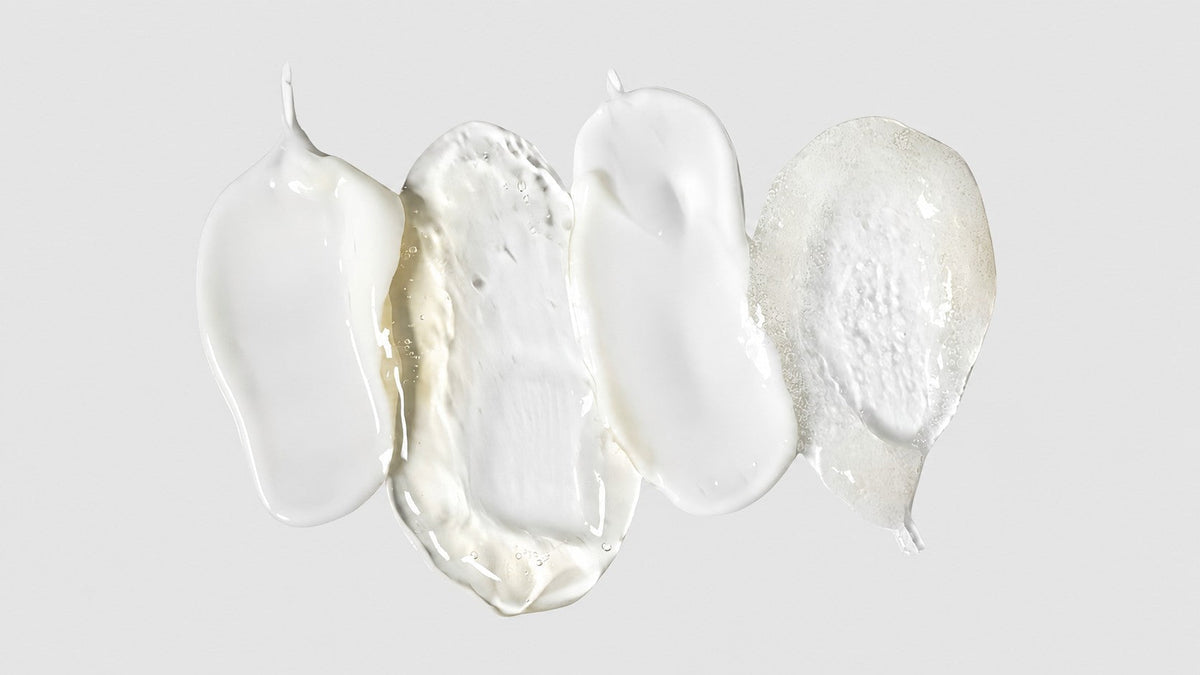
The guiding principle in skincare is to apply products from the lightest texture to the thickest.
The more liquid products go first, then serums and emulsions, and the cream comes last. In the morning, the final step is always SPF.
A toner isn't a mandatory step, and a serum isn't necessarily "stronger" than other products. Every product has its own job, so which ingredients you use and how you combine them matters more than how many steps your routine has.
If you have a serum and a cream, for example, the serum will as a rule go on before the cream. The cream at the end helps reduce water loss from the skin and rounds off your routine.
So remember the order like this: cleanse → toner → serum → cream → SPF in the morning.
If you use several serums, you generally apply them from the most liquid to the thickest. More importantly, you don't need several active serums in the same routine just because you have them at home.
How long to wait between steps
This is where we often look for a rule we don't actually need. You don't have to wait five or ten minutes between products. Once the previous product has absorbed nicely, or at least no longer moves around on your face, apply the next one. With more liquid products that's often a matter of seconds; with thicker ones it takes a little longer.
If your products start to pill, the problem is usually the amount or the combination of products, not that you didn't wait long enough.
SPF deserves special attention. Before applying it, I wait for the previous layers to settle on the skin. That way the SPF spreads evenly across the face.
My morning routine
My morning routine isn't long. The goal is simple: cleanse the skin, hydrate it and protect it from UV radiation.
1. Gentle cleansing
In the morning I use a gentle cleansing gel.
Overnight, sweat, sebum and leftovers from the evening routine build up on the skin. That's why a gentle cleanse suits me in the morning.
If your skin feels tight after washing, that's a sign your cleanser may be too aggressive for you. Tightness is not the goal of cleansing.
If you have dry or very sensitive skin, you don't even need to use a cleansing gel in the morning. For some people, rinsing with lukewarm water is enough.
2. Toner
Next I use the Torriden Dive-in Low Molecule Hyaluronic Acid Toner.
I apply the toner with my palms. Use a cotton pad only if you prefer that way of applying it.
The Torriden toner is a hydrating step. It adds moisture to the skin and preps it for the next products.
It's also worth knowing that you don't need a toner because your routine would be "incomplete" without one. If your routine is well put together, a toner is an extra step, not the foundation.
3. Eye care

Every morning I use under-eye patches. I put them on after cleansing and toner, before serum.
That way the ingredients in the patches come into direct contact with the skin, with no layer of serum or cream underneath. If I applied them over serum, they might not stick as well, and the serum could pill or smear because of their moist texture.
I leave them on for about 15 to 20 minutes, then remove them. I gently pat the remaining essence into the skin and move on to serum.
The patches help me most with morning puffiness and a tired-looking eye area.
4. Serum
In the morning I use the Beauty of Joseon Glow Deep Serum Rice + Arbutin.
I switched to it because I was looking for something that would give my skin a fresher look without stinging. Vitamin C is a bit too much for me in the morning. Alpha-arbutin targets similar concerns, mainly dark spots and uneven tone, but for me it's considerably gentler.
I apply two to three drops of serum to my face, gently work it into the skin and wait about half a minute before moving on to the next step.
5. SPF
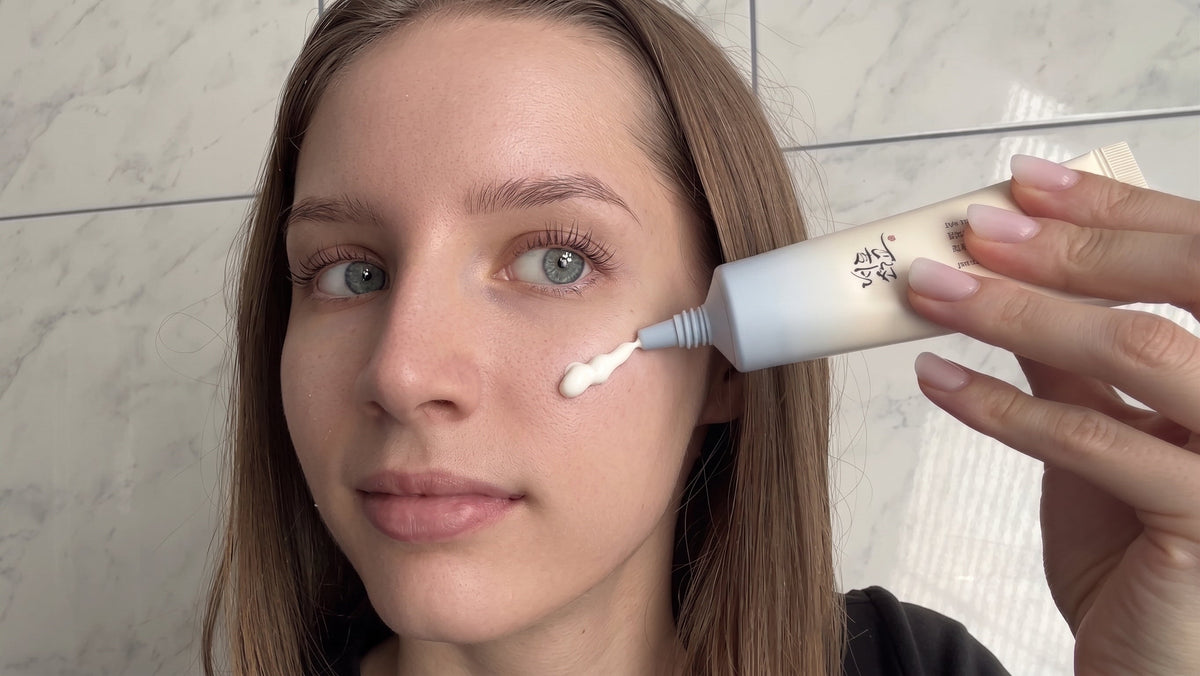
Korean sunscreen is the last step and the only one I truly never skip.
I skip moisturizer in the morning because my SPF hydrates my skin enough on its own. But that's my skin, not a rule. If your skin still feels tight after SPF, keep your cream and apply it before the SPF.
I explained why SPF is the best anti-aging step in my previous post. In short: I wear it every day. In January too. Even when it's cloudy.
My evening routine
In the evening the routine is a little different. That's when I remove SPF, makeup and the impurities that have built up on my face during the day.
1. Double cleansing
I start with a cleansing oil. Oil dissolves what water can't: SPF, makeup, sebum and pollution. I apply it to dry skin with dry hands and massage for about a minute. Then I add a little water so the oil turns into a milky emulsion, massage gently a few more times and rinse everything off thoroughly.
Only then comes the cleansing gel, which removes the remaining impurities, sweat and product residue from the skin.
Double cleansing has been one of the biggest changes for me since switching to a Korean routine. Not because my skin necessarily feels cleaner to the touch afterwards, but because it removes SPF, makeup and the other products that build up on the skin during the day far more effectively. As a result, the products I apply afterwards spread more evenly over clean skin.
2. Toner
The same toner as in the morning, but in the evening I use it with a slightly different purpose. After double cleansing the skin is clean and can also be more sensitive. The toner gives it some moisture before I apply active ingredients.
Since I stopped skipping it, actives irritate me less. I used to leave this step out often, and I quickly noticed the difference.
3. Serum
In the evening it's time for a serum with an active ingredient. Right now I'm using the Anua Azelaic Acid 10 Hyaluron Redness Soothing Serum.
Azelaic acid is especially interesting for skin prone to blemishes, redness and uneven tone. The formula also contains betaine salicylate, niacinamide, panthenol and soothing ingredients.
If you're just starting out with azelaic acid, don't use it every night. Anua recommends starting with once or twice a week and gradually increasing the frequency depending on how your skin tolerates it.
With actives, one simple rule applies: introduce them slowly and don't add several new active products at the same time.
4. Eye care
I use the Beauty of Joseon Revive Eye Serum with ginseng and retinal. I apply a small amount under the eyes and around the eye area and gently pat it in with my ring finger.
Because the product contains retinal, it's important to introduce it gradually, especially if you haven't used retinal before. If you use retinal or another retinoid, be extra consistent with sun protection in the morning.
5. Moisturizer

I finish the evening with the Dr. Althea 345 Relief Cream. The cream is the final step that adds moisture and lipids to the skin and reduces water loss overnight.
Its job isn't to "lock all the actives into the skin". What matters more is that it supports the skin barrier and reduces water loss.
6. A mask, once a week
Once a week I add a Biodance overnight mask.
I use it by cleansing my face first, then applying toner and serum, and only then the mask. With this mask I wouldn't use thick creams or oils beforehand.
I leave the mask on overnight and remove it in the morning. Then I continue with my usual morning routine.
What you can safely skip
You don't need ten steps. Most days I don't have them either.
If you have time for three or four things, make them these: cleansing, moisturizer and SPF in the morning. Then, if needed, one more product for a specific skin concern, a serum or a toner.
The biggest mistake in skincare isn't too few products. The biggest mistake is too many actives at once, because then you don't know which one is irritating your skin, and you usually blame the wrong one.
To wrap up
A good routine isn't the one with the most products. A good routine is one you understand and can follow consistently.
When I fixed the order, what changed wasn't which products I own. What changed was how much of them my skin actually gets. Same products, different result.
If you're just starting out, start with the basics: a cleanser, a moisturizer and SPF. Three products. Then add individual products based on your skin's needs.

Leave a comment
This site is protected by hCaptcha and the hCaptcha Privacy Policy and Terms of Service apply.